Wood Repair

Epoxy Restoration specializes in Wood Repair to restore the structural integrity as well as the aesthetics of wood structures. We repair all types of wood structures including homes, churches, schools, commercial and government buildings. Below are examples of successfully repaired Hawaii structures, with the following types of damage.


A. Ala Wai Elementary School Library and Cafeteria Buildings
(Click each picture to show enlarged image).

Click to enlarge
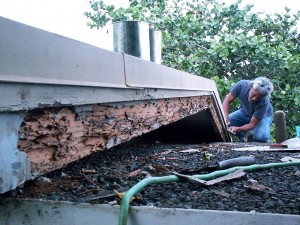
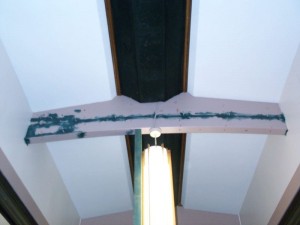
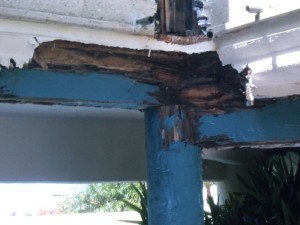
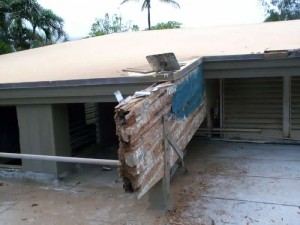
Major termite and rot damage to main carrier beams
Click to enlarge
Click to enlarge
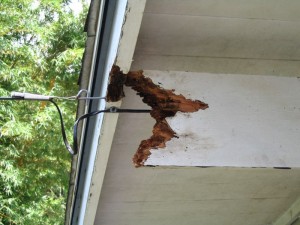
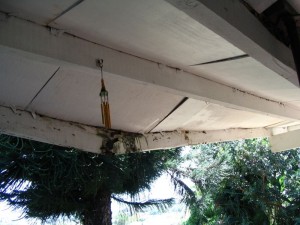
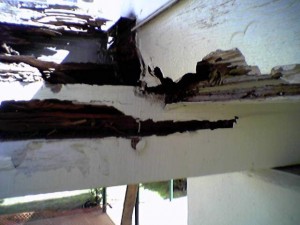
Termite damage to fascia beams
Click to enlarge
Some wood damage is sealed using high strength polyester paste prior to injection.
Click to enlarge
Once wood is sealed we inject the voids using EZ Resin. Low pressure pumps (15 psi) and injection guns are used. Little pressure is needed because the resin is super penetrating. Excessive pressure can warp the wood.
Click to enlarge
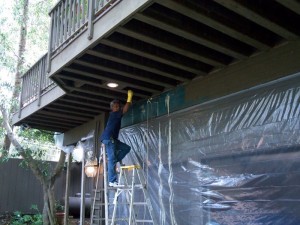
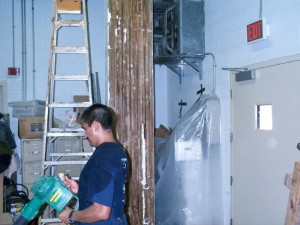
Beam in the process of injection. Plastic drop cloth is hung to catch drips.
Click to enlarge
Wood boards with PVC plastic liner are used to mold heavily damaged members. Spot cartridges of injection resin are used to finish filling after main pumping is done.
Click to enlarge
Damaged fascia boards sealed with polyester paste and injected.
Click to enlarge
Forms are stripped and surfaces are sanded.
Click to enlarge
Spot high strength polyester paste is used to finish off any surface defects.
Click to enlarge
Right side of library beams finish painted.
Click to enlarge
Long cafeteria corridor perimeter beams injected and finish sanded, ready for paint.
Click to enlarge
Left side library beams finish painted.


B. Heavy drywood termite rafter damage to Kailua residence

(Click each picture to show enlarged image).

Click to enlarge
Surface appears to only have minor damage.
Click to enlarge
Power wire brushes are used to remove loose wood to expose true extent of damage.
Click to enlarge
Guide forms are placed to create a straight edge for filling voids with super strong fiber reinforced polyester paste.
Click to enlarge
Click to enlarge
Click to enlarge
Injection cartridge is used to fill any remaining voids in the wood.
Click to enlarge
Click to enlarge
Holes for injection are plugged.
Click to enlarge
Surface is sanded smooth, ready for painting.


C. Deep rot to beam end, Nuuanu residence

(Click each picture to show enlarged image).

Click to enlarge
End of beam completely rotted off. All deleterious wood is removed by power wire brushing
Click to enlarge
Click to enlarge
Beam end is molded with plastic coated forms. Drop cloth is hung to catch drips. Our mold is then injected with EZ Resin
Click to enlarge
Forms are removed. Surfaces sanded, ready for painting.


D. Heavy load on a severely damaged garage header beam, North Shore

(Click each picture to show enlarged image).

Click to enlarge
Plastic drop cloth installed to catch drips. Holes are made at an angle and #3 rebar is inserted into hollow beam at top and bottom. Typically rebars slide easily into heavily damaged beams. Polyester paste is used to seal outside of beam.
Click to enlarge
Beam is injected using high volume resin pump.


E. Seashell restaurant creation of in place glulam beams, Kauai

(Click each picture to show enlarged image).

Click to enlarge
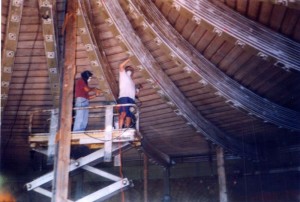
Never done before repair. Stacked 1x10 planks bolted together to form huge 28 foot long curved beams. Beams fell apart during Iniki hurricane. To repair beams we jacked up the beams to their original position. Seams between planks were caulked with clear caulk. Holes were drilled in from the bottom to the top of the stack. Holes were then injected with Unitex semi flexible injection resin. Resin progress could be seen through the clear caulk to insure a complete fill.
Click to enlarge
Beams were sanded ready for painting. Blue barrels were filled with water to 2000 pounds and hung from each beam for 48 hours. Beams were tested not only for load capacity but elastic ability to recover from loads. Each beam passed with flying colors. Testing done by JAI International Structural Engineers.


F. Aiea residence, heavily damaged beams

(Click each picture to show enlarged image).

Click to enlarge
Beams are so heavily damaged by termites they have cracked. Roof has large leaks due to sagging beams resulting in extensive rot.
Click to enlarge
Click to enlarge
Click to enlarge
Beams are jacked up, molded and injected with EZ Resin
Click to enlarge
Cracked beams are replaced with new pressure treated beams.


G. Cracked laminations in large beams, Church of Latter Day Saints Haaula

(Click each picture to show enlarged image).

Click to enlarge
Wide cracks in glulam beams are a big concern because of the heavy loads they carry.
Click to enlarge
Epoxy injection is used. The crack is surface sealed with epoxy paste. Plastic tubing is drilled into the crack at several intervals.
Click to enlarge
A very thin epoxy resin is injected into the ports which travels across the crack and welds it shut with a bond that is much stronger than the original wood.
Click to enlarge
Once cured the surface is sanded and painted.
Click to enlarge
A very high column, with numerous splits has been epoxy injected. It has been sanded and spackled and is ready for paint.


H. Heavily rotted beams and Girders, Hawaii Loa Ridge residence

(Click each picture to show enlarged image).

Click to enlarge
Beams and column were encased in plaster. For years water leaked into the plaster and rotted out this area of the post and column. The Owner peeled back the plaster to expose the damage.
Click to enlarge
Rotted wood is removed by power wire brushing. Wood is dried using a heat gun. Galvanized and stainless steel anchors are installed to hold patches firmly. Voids are filled with high strength fiber reinforced polyester paste.
Click to enlarge
Steel brackets are cleaned, treated with a rust neutralizing coating and polyester filled.
Click to enlarge
Click to enlarge
Holes are drilled and EZ Resin is injected to fill any remaining voids.
Click to enlarge
Repairs are sanded, ready for plaster patching.


I. Large Column repairs to Polynesian Cultural Center

(Click each picture to show enlarged image).

Click to enlarge
Columns heavily damaged by ground termites. Paint virtually falls off columns.
Click to enlarge
Very deep cavities left by ground termites.
Click to enlarge
Columns are surface veneered with polyester paste to seal holes and cracks.
Click to enlarge
EZ resin is injected into the voids. Column is sounded and test bored to insure a total fill.
Click to enlarge
Rezin flows through wood and drips out of tiny holes in the wood, indicating extent of fill. These columns continue through three stories of floors and curve inward. They are virtually impossible to replace. However, they are an easy fix for our repair system.


J. Large Glulam beam roof connections Polynesian Cultural Center

(Click each picture to show enlarged image).

Click to enlarge
Beams appear only slightly damaged.
Click to enlarge
Power wire brushing is used to expose full extent of damage.
Click to enlarge
Click to enlarge
Beginning to fill voids with high strength polyester paste.
Click to enlarge
Click to enlarge
Click to enlarge
Once filled, repairs are sanded smooth.
Click to enlarge
Beams are then painted. The significance of these repairs is important. The glulams continue for fifty feet unsupported, to support a cantilevered roof over the main dining facility. Most of the roof load force is at, or near, our repairs. Replacement of these beams would be very, very difficult. An easy fix for our repair system.